Visit Normandy’s D-Day beaches in 2026 with context and respect. Discover key sites like Omaha, Utah, Pointe du Hoc and more, with practical tips.
Introduction: Visiting the D-Day Beaches Thoughtfully
Normandy occupies a unique place in modern history. On June 6, 1944, Allied forces landed along its coastline, marking a decisive turning point in World War II.
Today, the D-Day beaches are not tourist attractions in the traditional sense—they are sites of remembrance, reflection, and historical understanding.
Visiting these places in 2026 requires more than a checklist. The geography, distances, and events are complex, and the experience is most meaningful when approached with context, respect, and local expertise.
For a broader overview of the region, including countryside highlights, towns, and travel logistics, see our complete Normandy travel guide.
Understanding the Geography of D-Day
One of the most common misconceptions is that the D-Day sites are concentrated in a single location. In reality, they extend across more than 80 kilometers of coastline, with inland sites playing a critical role.
The five landing sectors were:
- Utah Beach (U.S.)
- Omaha Beach (U.S.)
- Gold Beach (British)
- Juno Beach (Canadian)
- Sword Beach (British)
Each beach had different objectives, challenges, and outcomes. Understanding these differences is essential to understanding the operation as a whole.
Key D-Day Sites to Visit in Normandy
Omaha Beach: Scale and Sacrifice
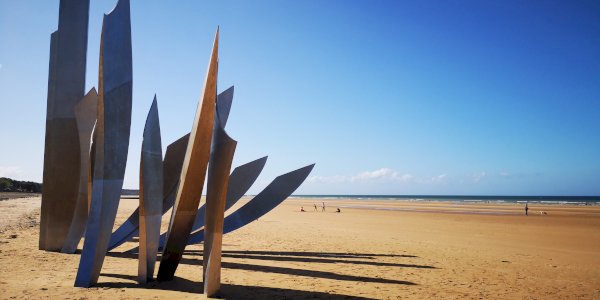
Omaha Beach is often the most emotionally powerful site. Its wide shoreline and bluffs illustrate the scale of the challenge faced by American troops.
Nearby, the Normandy American Cemetery overlooks the beach, offering a place for reflection and remembrance. The cemetery is not only a memorial but also a vital historical site that benefits from explanation and context.
Utah Beach: Strategy and Momentum
Utah Beach tells a different story—one of strategic advantage and rapid progress. Its museum and surrounding landscape help explain how geography influenced the success of the landings.
Utah Beach is often combined with inland airborne sites for a more complete understanding of the operation.
Pointe du Hoc: Courage and Terrain
Pointe du Hoc illustrates the extreme conditions faced by U.S. Rangers scaling the cliffs under fire.
Please note: access to Pointe du Hoc may be limited due to ongoing construction works at the parking area and visitor facilities. When the site is not accessible, visits are typically replaced by another significant location such as Longues-sur-Mer, which offers exceptionally preserved German artillery batteries.
Longues-sur-Mer: Preserved Fortifications
Longues-sur-Mer is one of the most complete coastal battery sites in Normandy. Its intact guns and bunkers provide a clear understanding of German coastal defenses and are an excellent complement to the beaches.
Normandy’s D-Day sites are often explored as part of wider history and heritage travel in France, offering insight into how these events shaped both the country and modern Europe.
Why Visiting with a Guide Makes a Difference
The D-Day sites are not self-explanatory. Without context, visitors may struggle to understand:
- Why events unfolded as they did
- How sites relate to one another
- The broader strategic picture
Guided visits provide:
- Chronological clarity
- Military and human context
- espectful storytelling
- Efficient routing between dispersed sites
This is especially important for travelers with limited time or those seeking a deeper, more meaningful experience.
Where to Base Yourself: Why Bayeux Matters
Bayeux is widely considered the best base for visiting the D-Day beaches.
Why Bayeux works so well:
- Central location relative to key sites
- Historic town with accommodation and dining
- Shorter driving distances than Paris-based visits
Tours departing from Bayeux allow for earlier starts, less time on the road, and a more balanced pace—particularly important for remembrance travel.
Based close to the main sites, our Normandy tours from Bayeux allow for earlier starts, shorter driving times, and a more balanced, in-depth exploration of the D-Day beaches.
Day Trips vs Staying in Normandy
Day Trips from Paris
Day trips from Paris are possible but involve long travel times and a condensed schedule focused on a limited number of sites. They suit travelers with very limited time but allow little flexibility.
Staying Locally
Spending one or more nights in Normandy allows:
- A broader range of sites
- Time for reflection
- Inclusion of countryside and towns such as Bayeux
For many visitors, this approach offers a far richer understanding of the events of 1944.
Who This Experience Is Best For
- History and WWII enthusiasts
- Veterans’ families and remembrance travel
- Educational and academic groups
- First-time visitors seeking context, not just landmarks
The D-Day beaches resonate differently with each visitor, but all benefit from a thoughtful, well-guided approach.
These sites can also be explored on carefully timed Normandy shore excursions, designed to maximize time ashore while respecting port schedules.
Best Time to Visit the D-Day Beaches
Normandy’s D-Day sites are accessible year-round.
- Spring & fall: Ideal balance of weather and crowd levels
- Summer: Longer days, higher attendance
- Winter: Quieter, reflective atmosphere
Each season offers a different tone, but the historical significance remains constant.
Final Thoughts: Remembering with Understanding
The D-Day beaches are among the most important historical sites in Europe. Visiting them is not about seeing “as much as possible,” but about understanding what happened, where, and why.
In 2026, the most meaningful visits are those that combine historical accuracy, respectful pacing, and local expertise—allowing the story of Normandy to be experienced with the depth it deserves.
For practical questions about visiting Normandy, guided tours, transportation, and what to expect on site, our France travel FAQ provides clear, helpful answers.
 Please wait