D-Day shore excursions explained for cruise passengers: physical demands, pacing, and why small groups matter in Normandy.
Why This Article Matters Before You Book
A D-Day shore excursion is not a typical sightseeing tour.
It is a visit to places of remembrance, sacrifice, and historical gravity. For cruise passengers arriving in Normandy, understanding what the day truly involves is essential to having a meaningful—and respectful—experience.
This guide is written for travelers who want to approach the D-Day sites with realistic expectations, appropriate pacing, and an understanding of the physical and emotional demands involved in 2026.
D-Day Sites Are Spread Out — Distance Matters
Normandy is a large, rural region. The D-Day landing beaches and associated sites are not concentrated in one location.
Typical driving realities from cruise ports:
- From Le Havre: long inland drives are required
- From Cherbourg: closer access to Utah Beach, but still dispersed sites
- Between sites: rural roads, limited highways, seasonal traffic
This means a D-Day shore excursion is defined by logistics as much as history. Attempting to visit too many locations in limited time often leads to rushed stops and frustration.
Physical Demands: What Many Travelers Underestimate
D-Day sites were not designed as modern tourist attractions.
Expect:
- Walking on gravel, grass, and uneven ground
- Open, exposed landscapes (wind, rain, sun)
- Stairs and slopes at certain locations
- Standing for extended periods during explanations
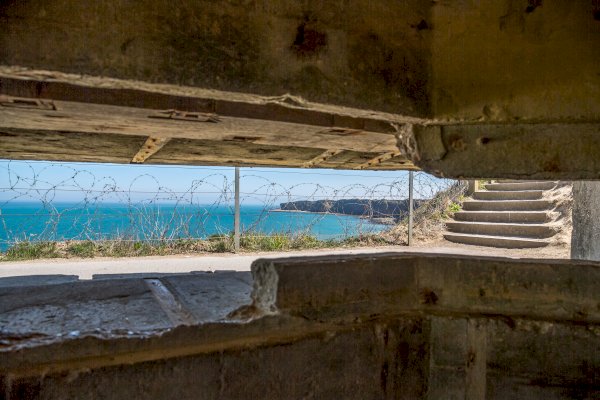
- At sites such as Pointe du Hoc, the terrain is particularly uneven, with craters, paths, and restricted access areas.
This does not require athletic ability—but it does require comfort with moderate walking and standing. Travelers with mobility concerns should choose itineraries carefully.
Emotional Intensity: This Is Not a Casual Visit
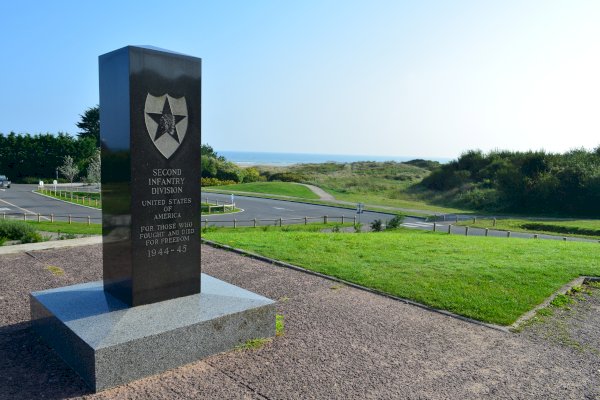
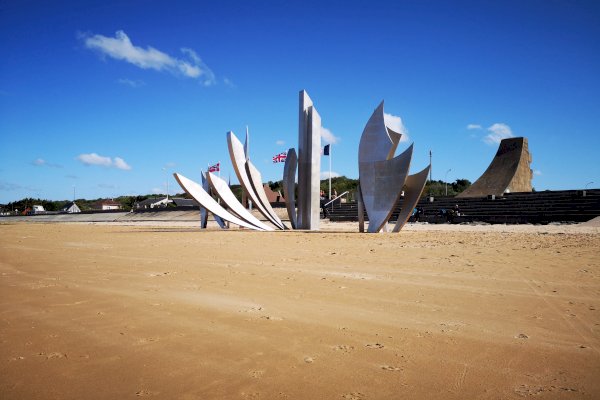
The D-Day landing beaches are emotionally powerful places.
Sites such as:
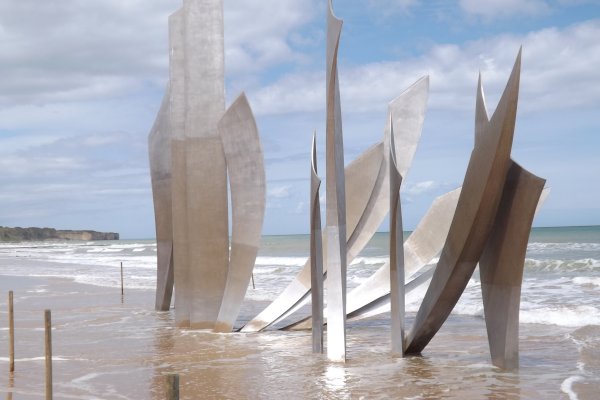
- Omaha Beach
- Normandy American Cemetery
- Sainte-Mère-Église
often evoke strong reactions—especially for travelers with personal or family connections to WWII.
This emotional weight is not always anticipated, particularly by travelers expecting a “historical overview.” Allowing time for reflection and silence is just as important as narration.
Also, these considerations are central to how Normandy shore excursions are planned for cruise passengers.
Why Small Groups Matter at D-Day Sites
Large groups struggle at D-Day locations for several reasons:
- Difficulty hearing explanations in open landscapes
- Limited space at memorials and viewpoints
- Reduced flexibility if conditions change
Small-group or private excursions allow:
- Clear, respectful narration
- Adjusted pacing based on the group’s needs
- The ability to pause or skip sites if needed
This is especially important at emotionally sensitive locations.
Why Cruise-Line Timelines Often Fail in Normandy
Normandy is one of the least forgiving regions in France for rigid, large-group cruise itineraries.
Common challenges include:
- Underestimated driving times
- Traffic congestion during peak season
- Delays at memorial sites
- Pressure to “keep moving” regardless of group needs
When itineraries are built around fixed schedules rather than real conditions, the experience suffers.
Independent, locally operated shore excursions are typically designed with:
- Conservative routing
- Built-in buffer time
- Fewer stops, done properly
What a Well-Planned D-Day Shore Excursion Looks Like
A meaningful D-Day shore excursion usually focuses on:
- Fewer sites, visited in depth
- Clear historical narrative
- Time for questions and reflection
- A pace that respects both the sites and the travelers
Quality comes from understanding, not quantity.
Choosing the Right D-Day Shore Excursion for You
This type of excursion is best suited for travelers who:
- Are comfortable with moderate walking
- Value historical context over photo stops
- Prefer smaller groups
- Want a respectful, unrushed experience
It may not be ideal for travelers seeking:
- Fast-paced sightseeing
- Minimal walking
- Light, entertainment-focused excursions
Being honest about fit leads to better experiences—and better memories. Many of these differences become even more important when visiting emotionally significant sites, which is why we outline expectations in detail in our guide to D-Day shore excursions.
Planning for 2026: Why Expectations Matter More Than Ever
Interest in D-Day history remains strong, particularly among North American cruise passengers. In 2026, demand continues to be high, and access to certain sites may vary based on preservation or safety considerations.
Flexibility and local expertise are essential. Our Normandy shore excursions from Le Havre and Cherbourg are built around these principles, prioritizing realistic routing, small groups, and time on site rather than rigid schedules.
Final Thought: D-Day Deserves Time, Context, and Respect
A D-Day shore excursion can be one of the most meaningful travel experiences of a lifetime—when approached with the right mindset.
Understanding the physical demands, emotional weight, and logistical realities beforehand ensures a visit that is respectful, educational, and deeply impactful.
 Please wait