loading Ophorus Please wait
USE PROMO CODE SUMMERVIBE26 AND RECEIVE 10% DISCOUNT ON A SELECTION OF TOURS
Ophorus app available
logo Ophorus Tours Your order is being processed, please wait loading Ophorus
France Travel Planning / Practical Information

Dordogne Travel Guide: Villages, Prehistory & Timeless France (2026)

Ophorus Blog - Dordogne Travel Guide: Villages, Prehistory & Timeless France (2026)
Plan your Dordogne trip in 2026 with insights into villages, medieval castles, prehistoric sites, and the best time to visit.

Introduction: Why the Dordogne Remains One of France’s Most Authentic Regions

The Dordogne—often referred to as Périgord—is one of France’s most evocative regions. Defined by stone villages, river valleys, medieval castles, and prehistoric heritage, Dordogne offers a sense of continuity that few destinations can match.

In 2026, Dordogne appeals strongly to travelers seeking authentic France, away from crowds and fast-paced itineraries. When explored at the right rhythm, it delivers one of the richest cultural experiences in the country.

For a broader overview of France’s regions, travel styles, and seasonal planning, see our complete France travel guide for 2026.

Dordogne at a Glance

  • Best for: Villages, medieval heritage, prehistory, countryside
  • Seasonality: April–October (excellent shoulder seasons)
  • Ideal stay: 3–5 days
  • Travel style: Small group tours, private tours, multi-day itineraries

Dordogne is compact geographically but dense in sites, making pacing and routing essential.

Understanding Dordogne: Four Historic Périgords

Dordogne is traditionally divided into four areas, each with its own character:

  • Périgord Noir: Medieval villages, castles, prehistory
  • Périgord Blanc: Rolling countryside and market towns
  • Périgord Vert: Rural landscapes and forests
  • Périgord Pourpre: Vineyards around Bergerac

Most travelers focus on Périgord Noir, home to the region’s most iconic sites.

Sarlat-la-Canéda: The Heart of Dordogne

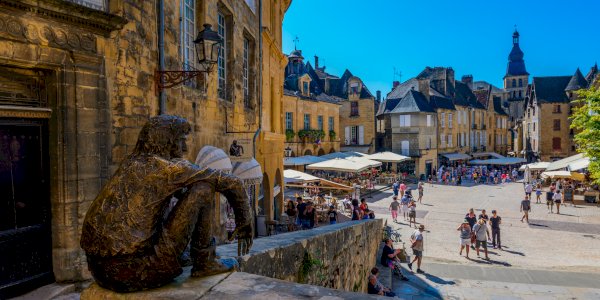
Sarlat-la-Canéda is widely considered the cultural and logistical heart of the Dordogne.

Why Sarlat Is the Ideal Starting Point

  • Exceptionally preserved medieval center
  • Central location within Périgord Noir
  • Easy access to villages, castles, and prehistoric sites

For these reasons, many Dordogne itineraries are designed to depart from Sarlat-la-Canéda, allowing travelers to explore the region efficiently without long daily drives.

Dordogne Villages: Stone, River & Continuity

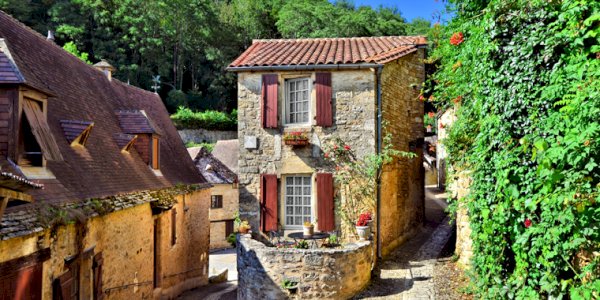
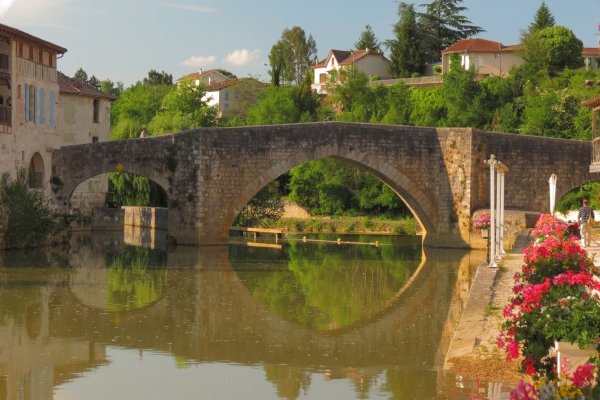
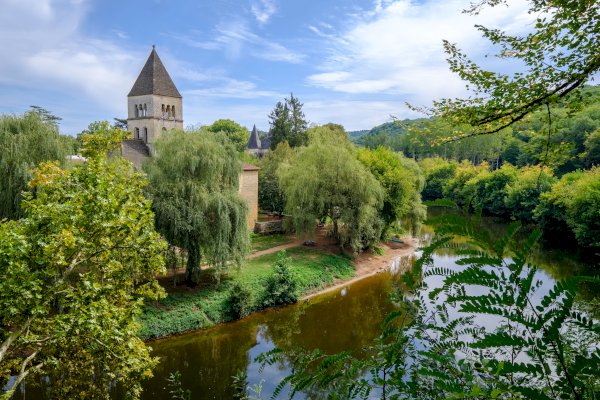
Dordogne is home to some of France’s most atmospheric villages.

Notable examples include:

  • Beynac-et-Cazenac
  • La Roque-Gageac
  • Domme

These villages are best appreciated outside peak hours, reinforcing the value of structured itineraries. Dordogne is often cited among the most iconic scenic countryside and villages of France, particularly in the southwest.

Castles of the Dordogne: Medieval Power Along the River

Unlike Renaissance châteaux, Dordogne castles reflect medieval defense and territorial control.

Key sites include:

  • Château de Beynac
  • Château de Castelnaud

These castles provide context to the region’s strategic importance during the Middle Ages.

Prehistory in the Dordogne: A Unique Heritage

Dordogne is one of the world’s most important regions for prehistoric art.

Highlights include:

  • Cave systems with Paleolithic art
  • Prehistory museums and interpretation centers

Sites such as the Lascaux area (replica visits) offer extraordinary insight into early human history. Dordogne plays a central role in history and heritage tours in France, from medieval fortresses to prehistoric art.

Dordogne Day Trips vs Multi-Day Travel

Day Trips

Day trips allow:

  • Limited village exposure
  • Minimal time for context

They are best for travelers already staying nearby.

Multi-Day Dordogne Travel

Strongly recommended.

Multi-day itineraries allow:

  • Balanced village and castle visits
  • Time for markets and countryside
  • Inclusion of prehistoric sites
  • Reduced daily driving

For most travelers, 3–5 days unlock Dordogne’s full richness.

How to Get Around the Dordogne

Public transport is limited and does not serve villages or rural sites effectively.

The most practical options include:

  • Chauffeur-driven private tours
  • Small group tours with local driver-guides
  • Multi-day itineraries based in or departing from Sarlat

This ensures comfort, access, and realistic pacing.

Best Time to Visit the Dordogne

  • April–June: Mild weather, active villages
  • July–August: Lively but busy
  • September–October: Excellent light, fewer crowds

Spring and early fall consistently provide the best overall experience.

Dordogne as Part of a Broader France Itinerary

Dordogne combines naturally with:

  • Bordeaux and the wine regions of Southwest France
  • Provence-style countryside itineraries
  • Multi-regional France journeys

It fits particularly well into slow, culture-focused itineraries.

Practical Note for Multi-Day Travelers

For guests traveling on multi-day itineraries in the Dordogne, practical travel information such as daily schedules, meeting points, and key details are provided digitally through the Ophorus travel app, ensuring smooth coordination throughout the journey.

Final Thoughts: Dordogne Rewards Time & Curiosity

Dordogne is not a destination to rush. Its villages, castles, and prehistoric heritage reveal their depth only when travelers allow time for exploration and reflection.

In 2026, Dordogne remains one of France’s most authentic regions—best experienced through well-paced, multi-day travel departing from Sarlat-la-Canéda.

For practical questions about village access, pacing, and regional logistics, our France travel FAQ provides clear guidance.
Secured payments

Payments secured by Stripe

Easy cancellation

Free cancellation on most tours

Trusted reviews

Verified traveler reviews only

Secured payments

Book your experience with complete peace of mind. All payments made on Ophorus are securely processed through Stripe, a trusted international payment platform.

Your payment information is encrypted and handled directly by Stripe. Ophorus does not store your credit card details.

You can pay safely using the available payment methods displayed at checkout. Once your payment has been confirmed, you will receive your booking confirmation by email.

Frequently Asked Questions
  • Is it safe to pay on Ophorus?

    Yes. Payments made on Ophorus are securely processed by Stripe. Your payment information is encrypted and transmitted directly through Stripe’s secure payment infrastructure.
  • What is Stripe?

    Stripe is an international payment provider that processes online transactions for businesses around the world. It holds PCI DSS Level 1 certification, the highest certification level in the payment industry.
  • Which payment methods are accepted?

    The payment methods available are displayed during checkout. Their availability may vary depending on your country, currency and device.
  • Why was my payment declined?

    A payment may be declined by your bank for several reasons, including insufficient funds, an incorrect card detail, an expired card or a security restriction. We recommend checking your information or contacting your bank before trying again.
  • What is 3D Secure authentication?

    3D Secure is an additional verification step provided by your bank. You may be asked to confirm your payment through your banking application, a security code or another authentication method.
  • Will I receive confirmation after payment?

    Yes. Once your payment and booking have been successfully confirmed, you will receive a confirmation email containing your booking details.
  • What should I do if I am charged but receive no confirmation?

    Please check your spam folder first. If you still cannot find your booking confirmation, contact the Ophorus team with the name and email address used for the booking. Avoid sending your full card number by email.
Easy cancellation

We understand that travel plans can change. That is why many Ophorus experiences include flexible cancellation conditions, allowing you to cancel your booking free of charge when the request is made before the applicable cancellation deadline.

The exact conditions depend on the type of experience booked, the departure date and any services included. Your cancellation policy is clearly displayed on the experience page and during the booking process, so you can review it before confirming your reservation.

Some tickets, tastings, meals, accommodation or third-party services may be non-refundable. When a cancellation qualifies for a refund, the amount is returned using the original payment method.

For full details, always refer to the cancellation conditions associated with your booking and to the Ophorus Terms of Sale.

Frequently Asked Questions
  • Can I cancel my Ophorus booking?

    Yes. You can request the cancellation of your booking, subject to the conditions and deadline associated with your selected experience.
  • Is cancellation free?

    Many tours can be cancelled free of charge when the request is submitted before the stated cancellation deadline. The applicable conditions are displayed before payment and included with your booking information.
  • How can I check my cancellation deadline?

    The cancellation conditions are shown on the experience page and during checkout. They may also appear in your booking confirmation. Conditions can vary between shared tours, private tours, packages and special activities.
  • Will I receive a full refund?

    You will receive a full refund when your cancellation meets the conditions of the applicable cancellation policy. Late cancellations, no-shows and certain non-refundable services may not qualify for a full refund.
Trusted reviews

At Ophorus, reviews help future travellers choose their experience with confidence. The feedback displayed on our website comes from customers who have booked or participated in our tours.

Reviews are collected after the experience, allowing travellers to share their honest opinion about the guide, itinerary, organisation, transportation and overall quality of the tour.

We value transparency and do not edit reviews to change their meaning. Positive and critical feedback both help us maintain high standards, improve our services and provide clear, useful information to future guests.

Our reviews may also be collected and displayed through trusted independent platforms such as Tripadvisor or other recognised travel review services.

Frequently Asked Questions
  • Are Ophorus reviews genuine?

    Yes. Reviews are submitted by travellers who have booked or participated in an Ophorus experience, or collected through recognised independent review platforms.
  • What is a verified traveller review?

    A verified traveller review is feedback linked to a genuine booking or participation in an experience. This helps ensure that the review is based on a real customer experience.
  • Are negative reviews published?

    Yes. Constructive negative feedback may be published alongside positive reviews, provided it follows the applicable moderation rules and relates to a genuine experience.
  • How does Ophorus use customer feedback?

    Feedback is reviewed by the Ophorus team to improve tour content, guide performance, logistics, customer service and the overall booking experience.
  • Can Ophorus remove a review?

    A review may be removed when it contains spam, offensive content, false information, personal data or comments unrelated to the booked experience. Genuine criticism is not removed simply because it is negative.